|
|
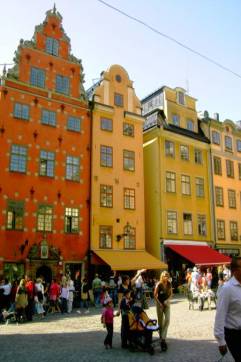
STORTORGET En 1520 los
adoquines fueron cubiertos de sangre durante la Matanza de Estocolmo. 80
nobles fueron muertos hasta antes que el rey Gustav Vasa pusiera fin a ello.
Actualmente, Stortorget es la parte central del Centro Histórico desde la
cual calles estrechas se acomodan en todas las direcciones. En diciembre, la
zona se cubre de puestos navideños. |
In 1520
the ground was covered of blood during the Slaughter of Stockholm. Eighty
noble were murdered before the King Gustav Vasa could end it. Nowadays,
Stortorget is the central part of the Historic Centre, from which narrow
streets appear in all directions. During December, this area has little
Christmas shops |
|
|
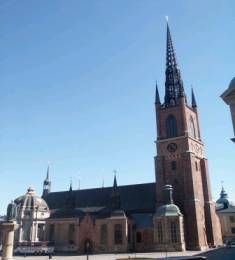
Esta es la iglesia más antigua de Estocolmo, construida entre los años 1280 y 1310. Guarda la gran mayoría de los sepulcros de la Realeza de Suecia. |
This
church is the oldest in Stockholm. It was built between 1280 and 1310. It
keeps most of the Swedish Royalty’s tombs. |
|
|
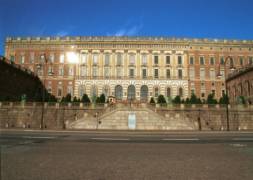
EL PALACIO REAL. El Centro Histórico está dominado por el Palacio Real. El palacio actual fue construido en el mismo lugar del anterior palacio, el cual sufrió un incendio en 1697. Nicodemus Tessin y Carl Hårleman fueron sus arquitectos. Una gran cantidad de artistas extranjeros, sobretodo franceses, fueron contratados para decorar el palacio y esta es la razón por la cual el interior presenta estilos diferentes. |
The
Historic Centre is dominated by the Royal Palace. The actual palace was built
in the same place of the previous one, which was burnt in 1697. Nicodemus
Tessin and Carl Harleman were the arquitects. A lot of foreigner artists,
specially from France, were contracted for decorating the palace. This is the
reason why the inside shows several styles |
|
|
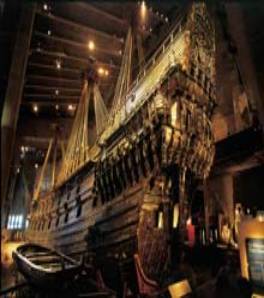
VASA. El Vasa es el único barco del siglo XVII que ha
sobrevivido hasta nuestros días. Con más del 95 % de su estructura
original y sus cientos de esculturas talladas, el Vasa es un tesoro
artístico y uno de los monumentos turísticos más visitados del mundo. |
When we
went to the Vasa museum of Stockholm, we visited a gallery of the XVII
century. In the gallery we found a huge sailing boat. The boat got three
floors. On the ground floor there was the boiler and the place where the
sailor put on the coal. On the second floor there were the sailor’s bedrooms.
The beds were very small. The third floor had a department cabin for captain
of the crew. The cabin had a desk for writing and bed, that was bigger than
de sailor’s beds. The crew
consisted of people from twelve to fifty years old. There were about 100.000
sailors in the boat, however, some of them died of thirst. I saw some
sculptures and representations made of wax, of the supposed people who
travelled on the Vasa. |