

NUTRITION
DIGESTIVE SYSTEM
The digestive system consists of the parts of the body, working together, that helps turn food and liquids into the building blocks and fuel the body needs.
Parts of the digestive system MOUTH PHARYNX EPIGLOTTIS ESOPHAGUS STOMACH SMALL INTESTINE (duodenum, jejunum and ileum) LARGE INTESTINE (cecum, colon and rectum) LIVER GALLBLADDER PANCREAS |
The digestive system |
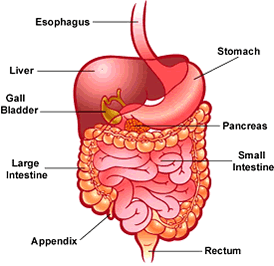
The digestion Even before you eat, when you smell a tasty food, see it, or think about it, digestion begins. Saliva begins to form in your mouth. When you do eat, the saliva breaks down the chemicals in the food a bit and helps the food easy to swallow. Your tongue helps out, pushing the food around while you chew with your teeth. When you are ready to swallow, the tongue pushes the bolus towards the back of your throat and into the esophagus. The esophagus is like a stretchy pipe, and it moves food from throat to your stomach. When you swallow the epiglottis closes the windpipe. In the stomach food breaks down into a liquid mixture. It does this with help from the strong muscles in its walls and gastric juices that also come from the stomach’s walls. The next part is the smallintestine, the small intestineis a long tube packed beneath your stomach and it breaks down the food mixture. It does this with different juices produced by the small intestine’s wall, the pancreas, liver and gallbladder. At the end of the journey, the nutrients pass from the intestine into the blood. The last part of the digestive track is the large intestine, which is where the body absorbs the water and some minerals and vitamins. The solid waste is eliminated through the anus. |
RESPIRATORY SYSTEM
Your respiratory system is made up of the organs in your body that help you to breathe. Remember, that Respiration = Breathing. The goal of breathing is to deliver oxygen to the body and to take away carbon dioxide. Parts of the respiratory system LUNGS The lungs are he main organs of the respiratory system. In the lungs oxygen is taken into the body and carbon dioxide is breathed out. The red blood cells are responsible for picking up the oxygen in the lungs and carrying the oxygen to all the body cells that need it. The red blood cells drop off the oxygen to the body cells, then pick up the carbon dioxide which is the waste gas produced by our cells. The red blood cells transport the carbon dioxide back to the lungs and we breathe it out when we exhale. TRAQUEA The trachea is sometimes called the windpipe. The trachea filters the air we breathe and branches into the bronchi. BRONCHI The bronchi are two air tubes that branch off of the trachea and carry air directly into the lungs. |
respiratory system |
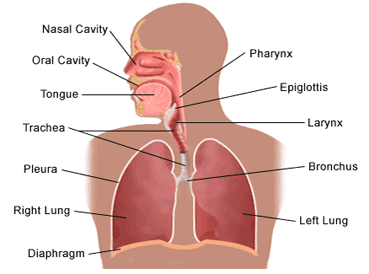
DIAPHRAGM Breathing stars with a dome-shaped muscle at the bottom of the lungs called diaphragm. When you breathe in, the diaphragm contracts. When it contracts it flattens out and pulls downwards. This movement enlarges the space that the lungs are in. This larger space pulls air into the lungs. When you breathe out, the diaphragm expands reducing the amount of space for the lungs and forcing air out. The diaphragm is the main muscle used in breathing.
|
EXCRETORY SYSTEM
excretory system |
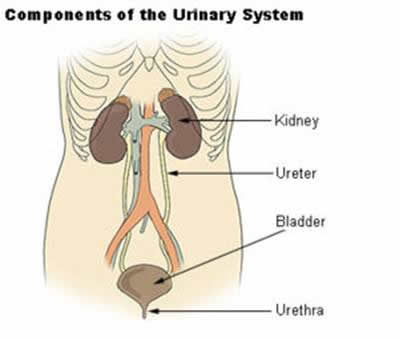
Parts of the excretory system KIDNEY: the bean- shaped kidneys filter waste products out of the blood steam and dispose of them by creating urine. Urine is made of these waste products dissolved in water. URETER: this thin, tube-like structure carries urine from the kidney to the bladder. There are two ureters -one draining each kidney. BLADDER: this expandable, muscular sac in the lower abdomen stores urine until it is passed from the body through the uretra. URETRA: this single tube-like structure allows urine to exit the body from the bladder. |
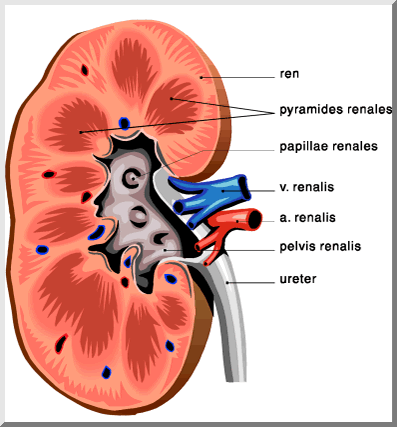
Parts of the kidney
CIRCULATORY SYSTEM
The Circulatory System is responsible for transporting materials throughout the entire body. It transports nutrients, water, and oxygen to your billions of body cells and carries away wastes such as carbon dioxide that body cells produce. Parts of the circulatory system The circulatory System is divides into three major parts:
|
|---|
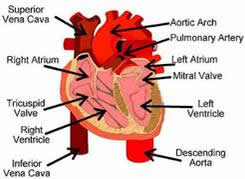
THE HEART The heart is an amazing organ. The heart beats about 3 million times during an average lifetime. It is a muscle about the size of your fist. The heart is located in the center of your chest slightly to the left. Its job is to pump your blood and keep the blood moving throughout your body. It is your job to keep your heart healthy and there are three main things you need to remember:
|
heart |
THE BLOOD The blood is a substance that it is constantly flowing through our bodies. The blood is made by blood cells and plasma. Blood Cells There are three types of blood cells.
Red Blood Cells are responsible for carrying oxygen and carbon dioxide. There are about 5 million red bloods cells in one drop of blood.
White Blood Cells help the body fight off germs.
Platelets are blood cells that help stop bleeding.
Plasma Plasma is the liquid part of the blood. Approximately half of your blood is made of plasma. The plasma carries the blood cells and other components throughout the body. |
|---|
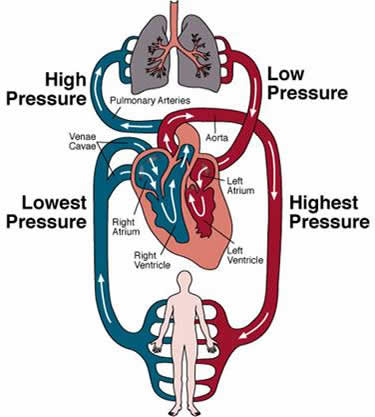 |
THE BLOOD VESSELS There are three types of blood vessels:
Arteries are blood vessels that carry blood from heart
Veins are blood vessels that carry blood back toward your heart
Capillaries are tiny blood vessels as thin than the hairs on your head. Capillaries connect arteries and veins. Food substances, oxygen and wastes pass in and out of your blood through the capillary walls.
|
