RELATION
NERVOUS SYSTEM
The nervous system is the complex body system that most directly determines ans organizes a person’s reactions to the world in which he or she lives. If life is a symphony of activities ( both voluntary activities, such as walking, talking, reading or going to class, and involuntary activities, such as breathing, digesting food or pumping blood) then the nervous system is the orchestra that makes it all happen. |
|---|
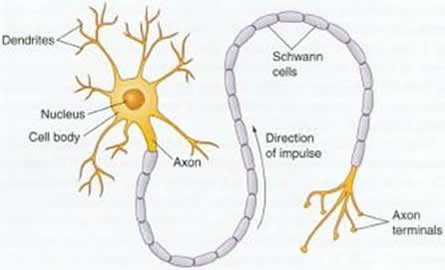
The nervous system has a special type of cells called neurons. Neurons are interconnected to each other and have the property of conducting, using electrochemical signals. |
 |
|---|
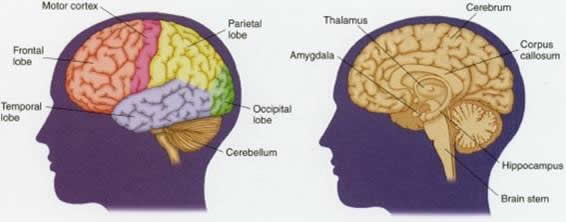
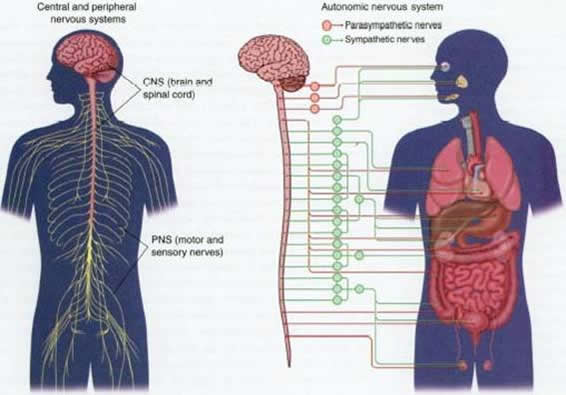
Parts of the nervous system The nervous system is divided into two parts: 1. The central nervous system (CNS) The CNS has two parts: the brain and the spinal cord. It is covered by the meninges. The brain is also protedted by the skull and the spinal cord is also protected by the vertebrae. Brain has three important structures: - Cerebrum It does a lot of important functions such as thought, voluntary movement, language, reasoning, perception, memory, etc. - Cerebellum It controls different functions such as movement, balance and posture. - Brain stem It is responsible for basic functions of life such as breathing, heart rate and blood pressure. Spinal cord connects brain and other organs and is responsible of reflex arcs. 2. The peripheral nervous system (PNS) The PNS is divided into two parts: - The somatic nervous system It consists of nerve fibers that send information to the central nervous system to skeleton muscle. - The autonomic nervous system It controls internal organs and glands. It is divided into two parts: the sympathetic nervous system and the parasympathetic nervous system. |
|---|