|
Castles were great military strongholds ruled by powerful lords. But castles were homes as well as armed fortresses. They used to be cold, uncomfortable and bad smelling, although in the 12th and 13th centuries cleanliness and plumbing improved. They used to have open arches for windows, where there was no glass, but shutters to close out the weather. Some wealthy families had horn-made panels which acted out as window-glasses. The floors were wooden, although some stone stairs could round the castle walls. In winter when all the windows and doors were shut, it was impossible to prevent it from smelling bad. However, floor rushes and sweet aromatic herbs spread on the floor helped.
The number of the people living in the castle depended on the importance of the lord and the size of his staff, which would include his family, the knights with their squires, and also a steward who ran the castle and the lord's estate, a treasurer, a chaplain, domestic servants, grooms, estate workers and the garrison or troop.
ROOMS
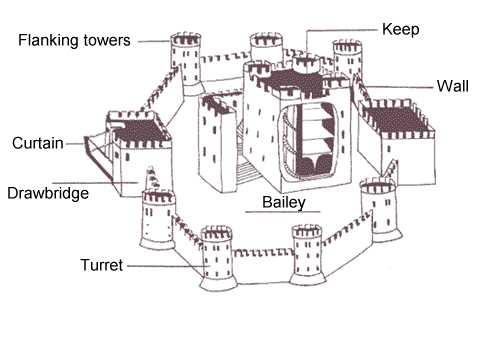
The Great Hall was the castle living room, where everybody used to eat and some people used to sleep, either on benches or on the floor. Originally, the Great hall used to be in the keep, but as castles got bigger, it moved to the inner bailey.
Early castles had a hearth in the middle of this room, to keep it warm. There didn't use to be chimneys and the room grew very smoky. Later on, castles developed stone fireplaces.
Inner and outer walls were plastered or whitewashed, but inner ones where then painted or decorated with tapestries. This wall covering used to protect people from the damp.
Here the manor court was held. The baron used to judge criminals and disputes about lands. The castle prison was in the keep, where the weapons and armours were also kept.
Some barons' families also had a private room called SOLAR (a withdrawing room), where they could rest by day and sleep at night. These private rooms were usually on the floor above ground level, and they used to be the most comfortable and the warmest ones in the castle. Ladies used to go there to sew, wash and talk, and all the important visitors were met there. Sometimes there was a separate bedroom as well.
There was also a private lavatory called WARDROBE, built into the outside walls or grouped together in one tower to reduce the bad smell. Some castles had water channels to flush the waste away, but it was usually dropped into pits or even into the moat.
Keeping clean was hard. Ladies washed using soap made from animal fat and wood ash, while until the 14thn century knights did not bathe as they believed that washing would take their strength away.
Most castles had a CHAPEL for prayer.
The KITCHEN, store-room for food and drink and the brewery, where beer was made, were under the great hall or in the inner bailey.
|
|
|