THE GERM THEORY
By 1800 most scientist and doctors knew that microorganisms called germs or microbes existed, but many of them thought germs or microbes were the result of disease, not the cause of it. This idea was called spontaneous generation. Some believed that disease was caused by gases called miasmas, others believed different theories but noone thought germs were the cause.
Pasteur was able to demonstrate that any microorganisms that developed in suitable media came from microorganisms in the air, not from the air itself.
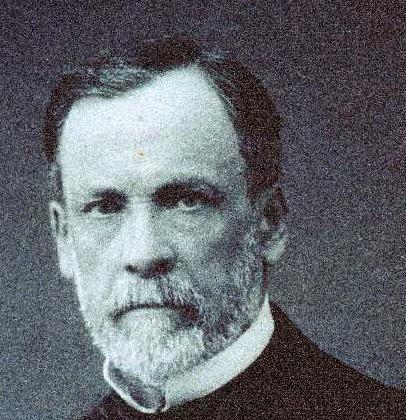
When Pasteur showed that parent microorganisms generate only their own kind, he established the study of microbiology. He succeeded in convincing the scientific world that microbes are living creatures, which come from preexisting forms, and an immense and varied component of the organic world, a concept that was to have important implications for the science of ecology.Louis Pasteur was the first scientist who made the links between germs and disease. He was a French chemist. By 1870 he was the first person to prove the connection between germs and fermentation and then the connection between germs and disease. Louis Pasteur established bacteriology as a science. He proved that "all living things, microbes included, come from other living things"; he used heat treatment (pasteurisation) to destroy microbes, showed that vaccination of sheep with weakened anthrax bacteria protects them against the disease, and discovered that the agent of rabies, a virus, could be weakened; his immunization of a young boy bitten by a rabid dog prevented what had been a fatal outcome.
The next step, linking a particular germ or microbe to a particular disease, was made by a German doctor, Robert Koch, who had the detailed medical knowledge that Pasteur, a chemist, lacked. For his 29th birthday his wife offered him a microscope that completely changed his life. He became a pioneer in the new science of bacteriology.
In 1872 Koch began to study anthrax, a fatal disease that affected cattle and sheep. It could spread to humans. By 1875 he had identified the microbe by studying the blood of affected and unaffected animals.
Robert Koch (first person to isolate bacteria in pure culture); discovered the agents of cholera and the cause of tuberculosis, and used his own criteria [Koch's postulates] to distinguish a bacterial pathogen causing a disease from an innocent microbe.
The germ theory says that certain diseases are caused by the invasion of the body by microorganisms, organisms too small to be seen except through a microscope. The French chemist and microbiologist Louis Pasteur, the English surgeon Joseph Lister, and the German physician Robert Koch developed the theory.