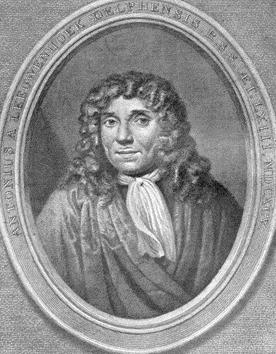
LEEUWENHOEK
Microbiology essentially began with the development of the microscope. Although others may have seen microbes before him, it was Antonie van Leeuwenhoek, a Dutch whose hobby was making microscopes, who was the first to give documentation of his observations. His descriptions and drawings included protozoans from the guts of animals and bacteria from teeth. His records were excellent because he produced magnifying lenses of exceptional quality. Leeuwenhoek sent his findings in a series of letters to the British Royal Society during the mid-1670s.
The microscope has had a greater impact on the development of knowledge than any other scientific instrument in history. Leeuwenhoek is the man who launched the modern era of microscopy. He discovered algae and protozoans, and his studies of sperm cells and aquatic microbes created the science of microbiology. Antony van Leeuwenhoek was one of the greatest pioneers in the earliest days of the scientific era.
He was among the first to study microscopical anatomy and entomology; and his unprecedented high-power microscopes led to his discovery of bacteria. Born in 1632, Leeuwenhoek was middle-aged before his career in microscopy began. Many of his experimental methods laid the foundations of modern scientific practice. His simple microscopes are well known and have been extensively studied. But the discovery of his original specimens has offered new insights into the birth of microscopy.