MEDICINE LEADERS
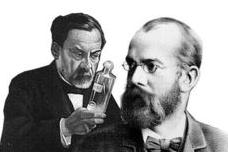
In 1877 Pasteur investigated anthrax. His investigations of animal diseases had good results. He discovered vaccines for anthrax (1881) and rabbies (1885).
Koch identified the microbes which caused TB (tuberculosis) in 1882 and cholera in 1883. He won the Nobel prize in 1905 for his work.
Lister revolutionized surgical practice by utilizing carbolic acid (phenol) to exclude atmospheric germs and thus prevent putrefaction in compound fractures of bones; and in the 1880s Koch identified the organisms that cause tuberculosis and cholera. Joseph Lister (who used carbolic acid spray to kill bacteria) insisted that antiseptics must be used on hands, instruments, and dressings and made it safe to do major surgery.
Paul Ehrlich discovered salvarsan (also known as "606," the 606th compound he had tried) as a treatment for syphilis and showed that certain dyes also had antimicrobial activity. In the course of his experiments on the therapeutic potential of organic dyes, Paul Ehrlich coined the word "chemotherapy" and extended the concept of the "magic bullet" from infectious diseases to cancer.
Gerhard Domagk (who found that the red dye Prontosil cured streptococcus infections) led to the development of the sulpha drugs.
Alexander Fleming discovered the inhibition of bacteria by a mould, Penicillium.
Howard Florey and Ernst Chain purified penicillin for clinical use.
Rene Dubos found an antibiotic in an organism in the soil.
Selman Waksman searched systematically among soil organisms for antibiotics and there discovered the second clinically important antibiotic, streptomycin.