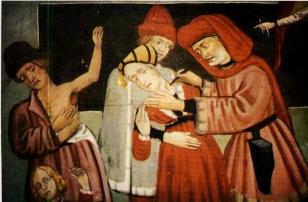
DISEASES AND DOCTORS
Doctors treated rich and powerful people like kings and popes. Ordinary people could not afford a doctor when they were sick.
Two different people did surgery in the Middle Ages. For the poor in the towns and most people in the countryside, surgery was done by barber-surgeons. In the great medical schools some of the masters, with a good understanding of anatomy, practised surgery. The main problem in surgery is pain and infection. Medieval surgeons used wine to clean the wounds and to drug the patient.
Doctors tried to cure everyone who was sick, but they did better with some diseases than with others. Here are some common diseases and what medieval doctors were able to do about them. Imagine you are treated by a Middle Ages doctor because you have one of these problems:
1) The common cold, or flu: fortunately, it doesn't matter much what the doctor did here, because you will probably get better on your own.If you get a fever and then the doctor bleeds you to reduce your blood humours that will make you sicker not better. You were probably better not going to the doctor. An herbalist, on the other hand, may have been able to give you willow bark (aspirin) for your fever.
2) Ear infections, or bronchitis: what you really needed is antibiotics, and those were not invented until about the 1930's. So you would have to get better on your own if you were going to get better. But people died of these diseases in Middle Ages, or they became deaf from earaches.
3) A broken leg: doctors were probably better at treating broken bones than other people were, because they understood anatomy (the inside of the human body) better. Without a doctor, if the bone wasn't set right, you could end up not ever being able to use that leg again. But the greatest danger was probably from infection.
4) Malaria: nobody had any idea what to do about malaria. Healthy adults usually did not die of malaria, but children and old people and sick people often did. Even today there are no cure, and the best we can do is try to keep people from getting it. Healing shrines, where you could get rest and good food, may have helped some people recover.
5) Depression: ancient doctors did not have antidepressants, but all different kinds of healers would try to talk you through your depression.
6) Cancer: Opium was known, but it is not clear how widely doctors used it. Most patients probably relied on wine to help them with their pain.