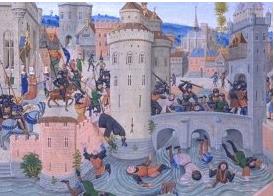
JACQUERIE AND PEASANT'S REVOLT
The insurrection of peasants against the nobility in France in 1358 was named Jacquerie from the nobles' habit of referring to any peasant as Jacques, or Jacques Bonhomme.
The hard times affected classes and regions in different ways, degrees, and rhythms. Some places almost escaped the disease. In the countrysides the poor suffered most. Standards of living declined. Peasant revolution like the Jacquerie in Île-de-France and the Languedoc showed desperation and were associated with the expression of egalitarian ideas; the Jacquerie coincided with a weak grain market and by efforts of lords to oblige labour services and payments after the Black Death.
Peasant's revolt also called Wat Tyler's Rebellion (1381) was the first great popular rebellion in English history. Its immediate cause was the imposition of the unpopular tax of 1381. The economic discontent had been growing since the middle of the century. The rebellion had support from several sources and included artisans and villains. Probably the main protest of the agricultural labourers and urban working classes was the Statute of Labourers (1351), which tried to fix maximum wages during the labour shortage following the Black Death.