MEDICINE AND SAINTS
To understand the phenomenon of the invocation of saints, it is necessary to penetrate the medieval mind of an ordinary man. Exposed to wars, hunger, and illnesses, the peasants suffered. They started a web of stories about Plague that was always depicted and often represented in popular tradition as a woman who entered a village at night and cut off the heads of the sleeping peasants, as a reaper would cut, and about saints who descended from the paintings with swords to kill the insatiable Plague. Plague needed to be confronted with an adequate opposing force. A doctor was expensive and his secret treatments and preaching were not very helpful.
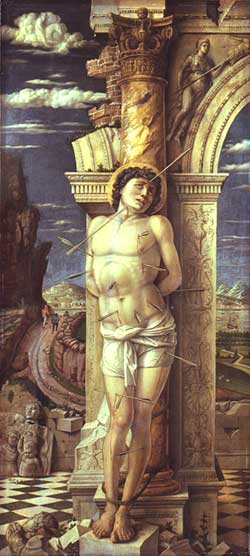
Sebastian is only one of the many saints honoured in the Catholic world and invoked against different illnesses and misfortunes. The cult of this martyr who lived in the 3rd century appeared in the early Middle Ages and became a part of the popular remedies against Plague. In time, it was replaced by the cult of another late medieval saint, Roch.
Saint Roch is venerated in the Roman Catholic Church as the protector against the Plague and all contagious diseases. The statue of Saint Roch is considered unique because it shows him with his left hand pointing to an open sore on his left leg. Few images of saints expose any afflictions or handicaps.
Saint Roch was the son of a governor of Montpellier. As he grew in age and in grace, he was noted for his gracious hospitality for the poor and travellers. He entered the Third Order of Saint Francis and dressed as a pilgrim, travelled on foot to Rome, asking alms. A pestilence was then devastating Italy; he devoted himself to caring for the sick. His cult became very popular and has remained so for the entire Church. We always see him pictured with his famous little dog.