TRANSLATORS AND SAINTS
During the early Middle Ages medicine passed into the widely diverse hands of the Christian Church and Arab scholars.
Early Christian Church had an adverse effect upon medical progress. Disease was regarded as a punishment for sin, and the only thing to do was prayer and repentance. The human body was sacred and dissection was forbidden. But the care and nursing upon the sick in Christian hospitals was more important than any intolerance shown toward medicine in the early days.
Perhaps the greatest service rendered to medicine by the Church was the preservation and transcription of the classical Greek medical manuscripts. These were translated into Latin in many medieval monasteries, and the Nestorian Christians (an Eastern church) established a school of translators to turn the Greek texts into Arabic. This famous school, and also a great hospital, were located at Jundi, in southwest Persia, where the chief physician was JurjYs ibn BukhtYsh, the first of a dynasty of translators and physicians that lasted for six generations. A later translator of great renown was Sunaynibn or Johannitus (born in 809), whose translations were said to be worth their weight in gold.
A reservoir of medical learning during those times was the great Muslim empire, which extended from Persia to Spain. Although it is customary to speak of Arabian medicine in describing this period, not all of the physicians were Arabs or natives of Arabia. Nor, indeed, were they all Muslims: some were Jews, some Christians, and they were drawn from all parts of the empire.
The greatest contribution of Arabian medicine was in chemistry and in the knowledge and preparation of medicines. The chemists of that time were alchemists, and their pursuit was mainly a search for the philosopher's stone, which supposedly would turn common metals into gold. In the course of their experiments numerous substances were named and characterized, and some were found to have medicinal value. Many drugs now in use are of Arab origin. Also from Arab origin are processes like distillation and sublimation.
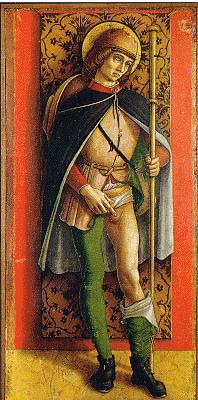
About this time there appeared a number of saints whose names were associated with miraculous cures. Among the earliest of these were twin brothers, Cosmas and Damian, who suffered martyrdom (in 303) and who became the patron saints of medicine. Other saints were invoked as powerful healers of certain diseases, such as St. Vitus for chorea (or St. Vitus' dance) and St. Anthony for erysipelas (or St. Anthony's fire). The cult of these saints was widespread in medieval times, and a later cult, that of St. Roch for Plague, was widespread during the Plague years of the 14th century.